Ahrefs review 2026: is it worth it or are there better options?


Ahrefs is an SEO and website analysis tool focused on keyword research, backlink intelligence, technical audits, and organic competitor analysis. It helps you understand why a site ranks, where traffic opportunities exist, and which weaknesses are holding a domain back. If you are asking what Ahrefs is in practical terms, we would describe it as an operational SEO database for decision-making rather than a simple reporting dashboard.
- What Ahrefs is
- How Ahrefs works
- Main Ahrefs features
- Ahrefs pricing 2026
- Pros and cons of Ahrefs
- Alternatives to Ahrefs
- Who Ahrefs is for — and who it is not for
- TeideSEO final opinion and rating
- Frequently asked questions about Ahrefs
- Conclusion
What Ahrefs is
Ahrefs belongs to the professional SEO software category. It is built for teams that need to research keywords, evaluate backlink profiles, audit websites, and understand in some detail what competitors are doing in Google. It is not a web analytics platform like GA4 and it is not a marketing automation suite either. Its real core is SEO intelligence powered by web crawling, SERP collection, and link data.
Who should use Ahrefs depends heavily on the maturity of the project. In our experience, it fits best for agencies, consultants, ecommerce teams, publishers, SaaS companies, and in-house marketing departments that already treat organic search as a serious acquisition channel. When a business publishes content consistently, competes in a demanding niche, or needs to justify priorities with data, Ahrefs becomes very useful. When a website has a few pages, no content motion, and minimal SEO ambition, many of its features are simply more than the project needs.
The problem Ahrefs solves is specific: it reduces uncertainty in SEO. Instead of deciding which keyword to target by instinct, which pages to refresh first, or which links are worth investigating, it gives you an evidence layer. That lets teams find content gaps, estimate traffic potential, spot pages losing visibility, and identify domains pushing competitor growth. This matches well with our approach to strategic SEO intelligence, where stronger decisions usually matter more than publishing more assets with less focus.
It is also worth clarifying what Ahrefs does not do. It does not replace strategy, it does not fix technical issues by itself, and it does not generate growth just because you bought a subscription. We have seen companies pay for it and use it only to check a handful of keyword positions every now and then. That is not a tool problem; it is a use case mismatch. Ahrefs pays off when someone on the team can translate data into editorial, technical, and competitive decisions.
How Ahrefs works
Ahrefs works by combining several systems for data collection and processing. First, it runs its own web crawler to discover pages, links, and relationships across domains at large scale. Second, it collects search results data across many queries and markets, which allows it to estimate rankings, keyword difficulty, traffic potential, and URL-level visibility. It can also incorporate site-specific inputs when a project is verified through Ahrefs Webmaster Tools, making technical auditing and issue tracking more accurate for owned properties.

From the user perspective, the actual workflow usually starts with a URL, a domain, or a keyword. If we analyze a domain in Site Explorer, Ahrefs returns a picture of its organic footprint: top pages, ranking keywords, incoming links, anchor text, referring domains, country distribution, and estimated visibility over time. If we start with a keyword in Keywords Explorer, the logic changes. We see volume, search intent clues, keyword difficulty, click estimates, question variants, and the current SERP landscape. This distinction matters because many users treat Ahrefs as one giant dashboard, when in reality each module answers a different kind of SEO question.
Ahrefs does not report actual first-party traffic data for third-party websites. Its traffic numbers are estimates derived from rankings and click models. That is important because users often mistake those estimates for exact analytics. We do not use Ahrefs to close business reporting by itself, but we do use it to compare domains, detect movement, and prioritize SEO actions. If a competitor starts gaining visibility across a topic cluster and several pages rise together, the estimate does not need to be perfect to reveal a strategic shift.
For technical audits, Ahrefs uses a crawler similar to what you would expect from a standard SEO bot. It scans pages and surfaces status codes, internal linking issues, duplicate metadata, canonicals, redirects, crawl depth, missing tags, and other on-page factors. The practical value lies less in dumping errors and more in grouping them into patterns. On medium and large sites, this helps teams separate cosmetic issues from problems that genuinely affect crawling, indexing, or discoverability. We often use it as an operational filter rather than as the final technical truth.
Another important layer is historical data. Ahrefs stores changes in links, keywords, and visibility over time, which makes it far more useful than a static one-day snapshot. On seasonal businesses, post-migration environments, or sites hit by algorithm updates, this matters a lot. Looking only at one recent week can produce bad interpretations. Looking at trend windows helps determine whether visibility loss comes from indexing issues, cannibalization, lost backlinks, SERP shifts, or plain seasonality.
In our day-to-day work, the best use of Ahrefs is not simply opening it and browsing metrics. The best use comes when it sits inside a methodology. We define the questions first, then move through keywords, competitors, pages, and links, and finally compare those findings with Search Console, analytics, and business outcomes. Used this way, Ahrefs becomes part of a broader strategic SEO intelligence process rather than just another flashy data tool.
Main Ahrefs features
Site Explorer for competitor research and real opportunity discovery
Site Explorer is, in our view, the center of Ahrefs. It lets you enter a domain or URL and understand which pages drive visibility, which keywords support that visibility, and how backlinks reinforce performance. The real value is not just seeing an estimated traffic number. It is identifying patterns: what content types work, which sections are growing, which topics are fading, and which URLs carry the most authority. When we study a market leader, this feature helps us separate random wins from repeatable strategy.
A practical use case is finding competitor pages that are clearly outperforming their domain average and then checking whether that growth comes from stronger search intent alignment, internal linking, or link acquisition. It is also very useful for folder-level analysis, especially for ecommerce and publisher sites. We have reviewed projects where one category section represented more than 40% of all organic growth, and that became obvious only after segmenting subfolders in Ahrefs. That kind of structural reading is one of the reasons agencies keep coming back to it.
Keywords Explorer for research, prioritization, and topical clustering
Keywords Explorer goes beyond monthly search volume. What matters in practice is the ability to organize ideas by difficulty, click potential, intent clues, parent topics, and semantic relationships. That helps build smarter content clusters and avoids chasing terms that look attractive in volume alone but deliver weak click value. In feature-heavy SERPs, this distinction matters a lot. High volume without meaningful clicks often leads to content production that looks busy but does not move business results.
At TeideSEO we mainly use it for three tasks. First, to discover thematic opportunities for editorial planning. Second, to identify quick wins where a page refresh or stronger internal linking might improve rankings without a long runway. Third, to decide whether a keyword deserves its own page or should be integrated into a broader URL. Ahrefs does not make those decisions for you, but it provides enough contextual data to make the process far less guess-driven.
Site Audit for technical SEO monitoring with operational value
Ahrefs Site Audit is useful when you want recurring technical checks without relying on an overly fragmented tool stack. It crawls sites and reports on indexability, metadata, redirects, duplicate content, broken links, resource weight, hreflang signals, internal linking, and other technical factors. It does not replace a deep manual audit or a full log-file analysis, but it gives teams a workable monitoring layer for most recurring SEO operations.
The strength here is practical sorting. Large sites do not just need a list of errors; they need to know where issues cluster and which page types are affected. Ahrefs helps with that first level of triage. It is also useful after redesigns, template updates, or migrations, where technical regression needs to be caught quickly. In our view, it performs best as a continuous health-check system rather than as a total substitute for specialist technical analysis on complex infrastructures.
Backlink profile analysis and Link Intersect for smarter link building
Ahrefs remains especially strong in backlink analysis. Its link database and filtering options make it easy to review referring domains, new and lost links, anchor text patterns, and linked pages. This matters both for authority strategy and for diagnosing why a page or domain may have weakened over time. If several important links disappear around the same period that visibility drops, Ahrefs can make that relationship visible fast enough for teams to react.
Link Intersect is one of the more practical prospecting tools inside the suite. Rather than hunting manually for possible linking opportunities, it shows domains that link to your competitors but not to you. That does not mean every site should go straight into outreach, but it does remove a lot of random noise. In industries where earning relevant links is expensive and time-consuming, better prospect filtering matters. We still recommend reviewing thematic relevance and realistic acquisition potential rather than blindly exporting every opportunity.
Rank Tracker for visibility monitoring with strategic context
Ahrefs Rank Tracker works well if you need to monitor keyword groups by country, device, or location. We would not call it the single most differentiated product in the suite, but it integrates cleanly with the rest of the platform. That makes it easier to connect ranking changes with page updates, SERP features, or competitor shifts. On projects with multiple service lines or product groups, that grouping ability helps reveal which topic sets are gaining traction and which ones are fading.
The key is not to use rank tracking as a vanity board. We do not recommend measuring SEO success by a single head term. Ahrefs becomes much more useful when keyword groups reflect intent, funnel stage, or page type. That way, teams can tell whether service pages are climbing, whether editorial content has stopped supporting acquisition, or whether branded visibility is increasing against direct competitors. Combined with Search Console and business KPIs, this becomes a more strategic view of organic performance.
Content Gap and Top Pages for business-led prioritization
Two underused Ahrefs features are Content Gap and Top Pages. The first compares your domain with competitors and surfaces keywords where they rank and you do not, or where your presence is clearly weaker. The second identifies which URLs drive the most organic value inside a domain. Used together, they help teams move from reactive publishing into deliberate, opportunity-led SEO planning. The aim is not to produce more content. The aim is to cover proven demand more effectively.
A practical example would be noticing that several competitors consistently gain traffic through comparison pages or highly specific category pages while your site has no equivalent asset at all. Ahrefs makes that kind of gap visible quickly. From there, you can decide whether to build new landing pages, expand existing ones, or reinforce internal linking to close the gap. On resource-limited teams, that kind of prioritization prevents wasted effort on content that may be interesting but commercially irrelevant.
Ahrefs pricing 2026
Ahrefs pricing in 2026 still places it clearly in the professional tier. It is not designed for tiny budgets or casual use. Beyond the headline subscription fee, teams need to pay attention to user limits, project caps, credits, and export rows, because those operational limits affect daily usefulness more than many buyers expect. We have seen teams choose too small a plan and then feel restricted almost immediately, not because the product lacked features, but because the limits got in the way.
It is also worth separating access from adoption. A solo operator might buy Ahrefs because the market talks about it constantly, only to realize they are using Site Explorer occasionally and doing very basic keyword research. That can make the ROI weak. On the other hand, if the team runs audits regularly, builds content at scale, or manages several domains, the value equation improves a lot.

| Plan | Price/month | Includes | Best for |
|---|---|---|---|
| Free / Webmaster Tools | Free | Limited access for verified sites, basic Site Audit, and restricted data for your own property | Site owners who want a first layer of auditing without cost |
| Starter | $129 | Core SEO functions, limited usage of major tools, reduced projects and credits | Freelancers or small teams with occasional needs |
| Lite | $249 | Higher analysis limits, multiple projects, keyword tracking, and more practical use of core modules | Small businesses and consultants using Ahrefs weekly |
| Standard | $449 | More capacity, broader historical access, more users, and stronger reporting support | Agencies, ecommerce teams, and in-house SEO operations |
| Advanced | $1,499 | High limits, deeper historical data, more seats, and expanded controls for larger teams | Mature SEO departments and multi-market organizations |
| Enterprise | $2,999 | Maximum scale, more governance, added support, and corporate-oriented capabilities | Large enterprises, publishing groups, and high-demand environments |
Prices verified in April 2026. They may change.
The free version exists, but it needs context. Ahrefs free access through Webmaster Tools and limited utilities is useful for site owners who want to inspect their own websites. It is not a real replacement for the full suite, and it does not open up broad competitor analysis. It is fine for light testing or early learning. It is not enough for serious SEO operations.
Starter can be a reasonable entry point if you want to learn the product and your workload is low. Still, many agencies and consultants will outgrow it quickly. Lite is more realistic for consistent weekly use, although it can still feel constrained when several clients or markets are involved. Standard is the point where Ahrefs starts to feel operationally comfortable for heavier use. Advanced and Enterprise are aimed at organizations where the cost is spread across more teams, more domains, and more continuous use cases.
Pros and cons of Ahrefs
Pros
- Very strong backlink database for competitive analysis. Ahrefs remains one of the most useful tools for reviewing referring domains, link losses, anchor patterns, and authority opportunities. The value comes not only from link volume but from how quickly users can filter and interpret link intelligence.
- Fast interface for identifying content opportunities. Keywords Explorer, Content Gap, and Top Pages make it easier to move from vague assumptions into a prioritized content roadmap. For service websites and publishers, that can save significant planning time.
- Good balance between technical SEO, keywords, and links. There are broader marketing suites and there are more specialized technical crawlers, but Ahrefs offers a solid middle ground for SEO-focused teams. That reduces tool sprawl in day-to-day operations.
- Useful for competitor research even without internal data access. When entering a new market or auditing an unfamiliar niche, Ahrefs can provide a surprisingly clear picture of how rivals are winning. Folder-level analysis and top-page breakdowns are especially valuable here.
- Reasonable learning curve for users with basic SEO literacy. It is not built for total beginners, but it also does not require endless setup before becoming useful. Users with a basic understanding of SEO concepts can extract actionable insights fairly quickly.
Cons
- Pricing climbs quickly and usage limits matter. The issue is not just that Ahrefs is expensive. It is that some plans can feel restrictive in projects, credits, users, or exports before a team really gets full value from the tool. That can make adoption frustrating.
- It does not replace analytics or real business data. Users often over-trust estimated traffic numbers. Those estimates are useful, but they are not first-party truth. Without Search Console, analytics, CRM data, and business context, the risk of poor decisions increases.
- The Spanish-language experience is still not ideal. Ahrefs in Spanish is only partial in practice, especially across support resources and documentation. For less experienced teams, that can slow onboarding and increase dependence on external guidance.
- Technical auditing is helpful but not enough for highly complex websites. On large JS-heavy, international, or log-dependent environments, Ahrefs will surface symptoms but not always the full root cause. Complex technical SEO still needs deeper specialist workflows.
Alternatives to Ahrefs
| Tool | Starting price | Best for | Our rating |
|---|---|---|---|
| Semrush | $139.95/month | Broader digital marketing: SEO, PPC, content, and cross-channel competition | 8.7/10 |
| Moz Pro | $99/month | Teams wanting a simpler SEO interface with less technical depth | 7.2/10 |
| SE Ranking | About $65/month | Small businesses and smaller agencies with tighter budgets | 7.8/10 |
| Sistrix | €119 per module/month | Visibility analysis and European market monitoring | 7.9/10 |
| Mangools | About $49/month | Users prioritizing simplicity over depth | 6.9/10 |
Semrush is the most direct alternative and the comparison users search most often alongside Ahrefs reviews. We think it is stronger when a team needs more than SEO: paid search, broader competitor intelligence, social tools, and a more marketing-wide workflow. If the focus is pure SEO, Ahrefs often feels cleaner and more direct. If the company wants one broader growth stack, Semrush becomes more attractive. We reviewed it in detail in our Semrush review.
Moz Pro has lost some visibility against faster-moving suites, but it still makes sense for users who want a less overwhelming experience. Its strength is relative simplicity and a softer learning curve. Where it falls behind Ahrefs is deeper competitor research and backlink intelligence. We would only prioritize it for very small teams that value ease of use more than analytical depth.
SE Ranking competes well on value for money. It does not fully match Ahrefs depth in some categories, but for small businesses and lean agencies it can solve a lot at a lower cost. We like it as an option when budget is central and the project does not require heavy historical analysis or extensive backlink work. For rank tracking, research, and basic auditing, it is a serious contender.
Sistrix is especially good for SEO visibility analysis, particularly in several European markets. It can be excellent for spotting ranking trends and comparing domains through its visibility-focused lens. Where it loses ground against Ahrefs is in feeling like an everyday operational suite across keywords, links, audits, and content discovery. Still, for teams obsessed with visibility curves, it remains relevant.
Mangools is the alternative for users who want something lighter and easier. It fits smaller sites, affiliates, and users who do not need multiple layers of detail. The tradeoff is that it often gets outgrown as projects mature. We would not place it against Ahrefs for agency-grade work with demanding clients, but it can be a decent starting point for beginners.
Who Ahrefs is for — and who it is not for
Ahrefs is a good fit for:
- SEO agencies and consultants who need to compare domains, identify gaps, and justify priorities with data.
- Ecommerce businesses with many categories or products where keyword research and continuous auditing matter.
- Publishers, blogs, and SaaS teams building topical clusters and updating content regularly.
- In-house teams working in competitive markets where organic search is a serious growth channel.
Ahrefs is not a good fit for:
- Very small local businesses that barely publish content and only want to check rankings occasionally.
- Users looking for a web analytics or conversion reporting tool; another stack is needed for that.
- Teams without the time or skill to interpret SEO data, because the subscription will likely be underused.
- Users who need a fully localized Spanish experience and highly guided beginner onboarding.
This distinction matters because many poor software purchases come from bad expectations rather than bad products. Ahrefs is not wrong for everyone; it is simply not universal. When a business needs execution more than intelligence, it may be smarter to invest first in strategy, content, architecture, and measurement. Before paying for an expensive suite, we usually recommend clarifying goals and priorities within a strategic SEO framework. That makes it easier to tell whether the tool will create ROI or just create the feeling of control.
TeideSEO final opinion and rating
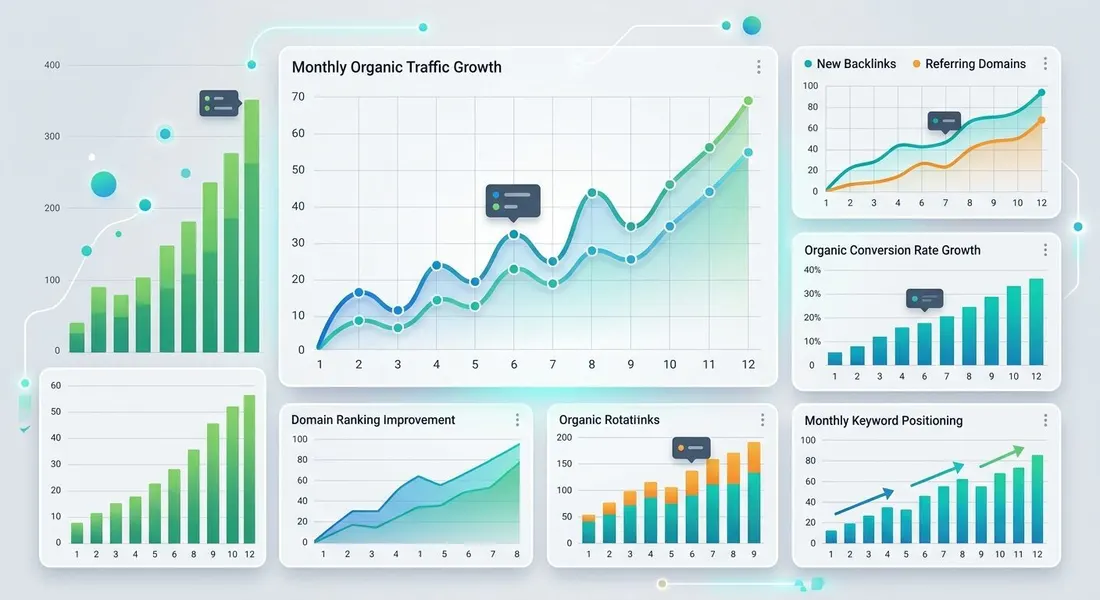
At TeideSEO, we have analyzed Ahrefs for client projects and internal use. Our take is fairly direct: it remains one of the best products for pure SEO when the priority is keyword research, competitive analysis, and backlink intelligence. We like it because it helps surface opportunities quickly and because, when used inside a clear process, it improves prioritization around content, pages, and technical work. We also appreciate that it does not force users through an excessively cluttered suite just to reach the core SEO insights.
That said, we do not recommend it automatically. The price is high for small businesses, and ROI depends heavily on whether the team will really use the data. If a company cannot turn metrics into decisions, Ahrefs becomes an expensive interface full of interesting numbers. We also do not think it is the best choice when a team needs a more cross-channel marketing stack or a fully localized Spanish experience. In those cases, several alternatives will make more sense.
Where we do recommend it is in projects where organic search genuinely matters, competition is real, and the team will work through ongoing analysis, hypotheses, and prioritization. In that context, Ahrefs provides clarity and saves time. Our score: 8.4/10 — it excels at strategic SEO work, but pricing and context limitations keep it from scoring higher.
Frequently asked questions about Ahrefs
Is Ahrefs worth it?
Ahrefs is worth it when SEO is a meaningful acquisition channel and the team intends to use the data to make decisions. If you need competitor research, keyword discovery, backlink analysis, and recurring technical checks, it performs very well. In our experience, it creates the most value for teams that already understand basic SEO and can turn insights into action. If you only want occasional keyword checks, the subscription cost becomes much harder to justify.
Does Ahrefs have a free version?
Yes, but with important limits. Ahrefs offers free access mainly through Webmaster Tools and a few restricted utilities rather than a broad freemium suite. It is useful for reviewing your own site and getting a first layer of technical and organic insight. It is not a substitute for full competitor analysis, broad keyword research, or continuous agency-grade work. For serious SEO operations, a paid plan is still necessary.
How much does Ahrefs cost?
Ahrefs pricing in 2026 starts at about $129 per month and goes up to $2,999 per month for enterprise-level use. In between, there are Lite, Standard, and Advanced plans with meaningful differences in projects, users, limits, and historical access. The key is not just the entry price but whether the plan’s restrictions fit your workflow. A plan that looks fine on paper can feel too small once multiple domains, clients, or regular exports are involved.
Is Ahrefs available in Spanish?
Ahrefs in Spanish is only partially available in practice. The interface and many educational resources still rely heavily on English SEO terminology. For experienced practitioners, that is usually manageable, but it can slow down onboarding for newer users or non-specialist teams. If full Spanish localization is a critical requirement, there are other tools that may feel easier to adopt.
Ahrefs vs Semrush: which one is better?
The answer depends on your main use case. We think Ahrefs is slightly better for pure SEO, especially for backlinks, organic competitor analysis, and content opportunity prioritization. Semrush is stronger when the company also needs PPC, broader digital marketing features, and a wider cross-channel toolbox. If organic SEO is the clear priority, we lean toward Ahrefs. If the stack needs to support multiple acquisition channels, Semrush often wins.
Is Ahrefs good for beginners?
It can work for beginners, but it is not the easiest entry point for someone starting from zero. The interface is not especially hostile, yet many metrics make little sense without understanding search intent, link authority, keyword difficulty, and traffic estimation. A beginner can learn a lot through Ahrefs, but some context is needed to avoid bad interpretations. We think it fits best for users who already know the basics from Search Console and entry-level SEO work.
Can Ahrefs be used for local SEO?
Yes, although it is not a specialized local SEO platform. It can help with local-intent keyword research, city-level competitor analysis, service-area pages, and local content opportunities. What it does not replace is Google Business Profile management, review acquisition, local citations, or other highly local workflow components. For competitive local markets, Ahrefs adds value. For tiny local businesses, it may be more than necessary.
Conclusion
Ahrefs remains a smart buy for teams that treat SEO as a serious process and need actionable data on keywords, competitors, and backlinks. If your project needs more than intuition and you want stronger evidence behind content and technical decisions, it is worth considering carefully. If you want us to map it to your real situation, review our related TeideSEO service.